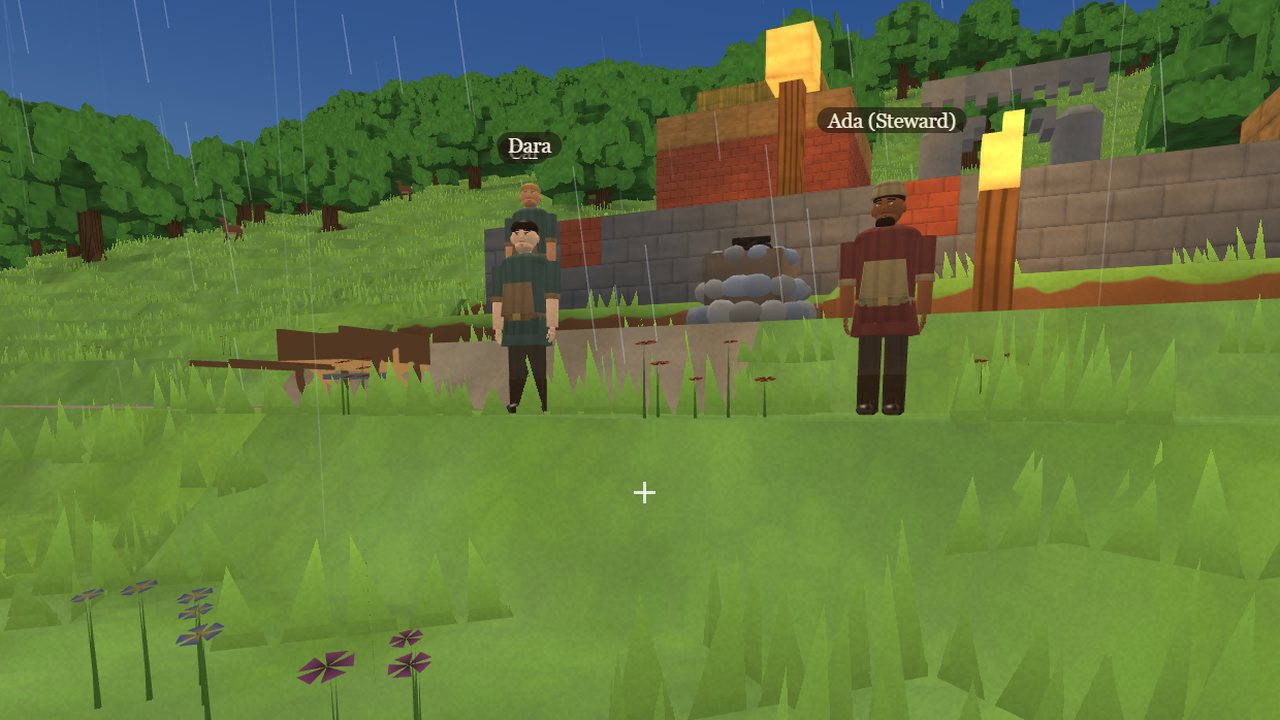
Join a friend's world by link, with one shared clock, one chest and a vote each at the Moot.
Wave 11 lets people play together. The world's Steward shares a link; a friend opens it, picks a name and joins. The Steward's page holds the clock and does the saving, and every action goes through the host in one ordered list that every page replays in step, so the worlds stay the same. Edits show at once and are confirmed by the host; every ten seconds the pages compare a hash of the world and resync if they differ.
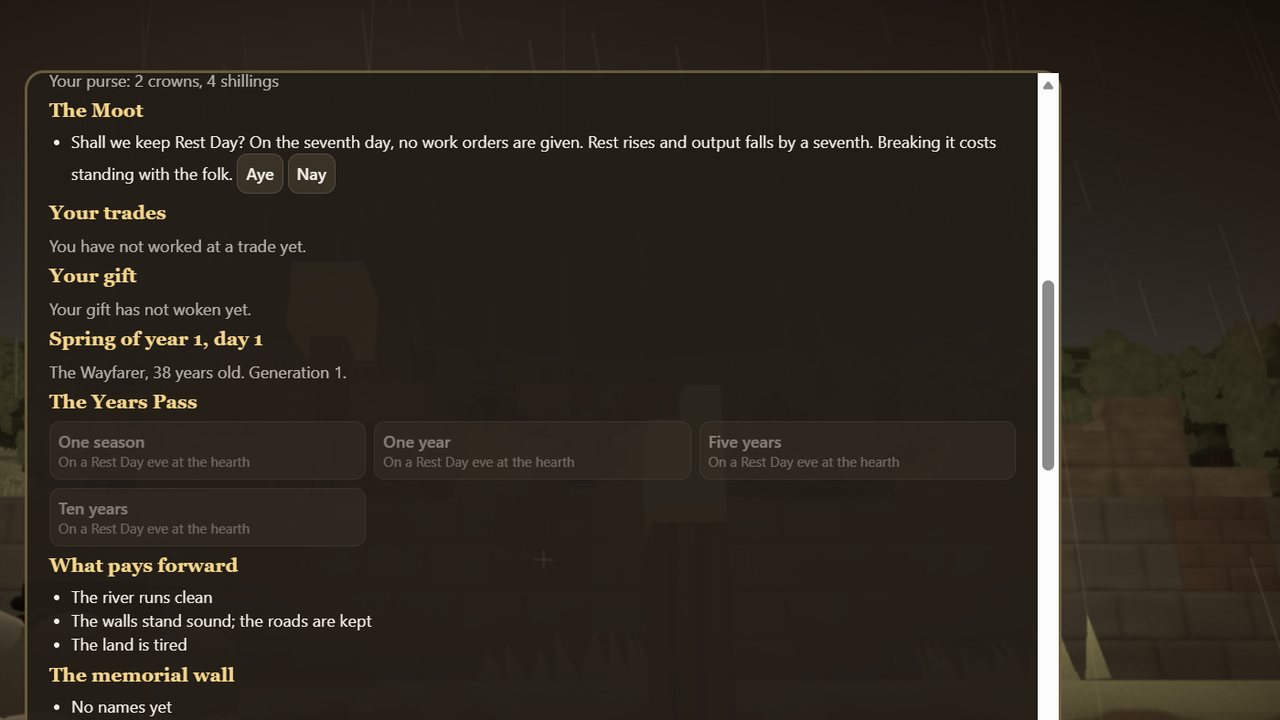
Names float over heads and there is chat. Each player keeps a purse and the steading has a shared chest. The Moot counts one vote per account. The Steward can remove a player, pause and roll back, and a cart follows whoever holds it.
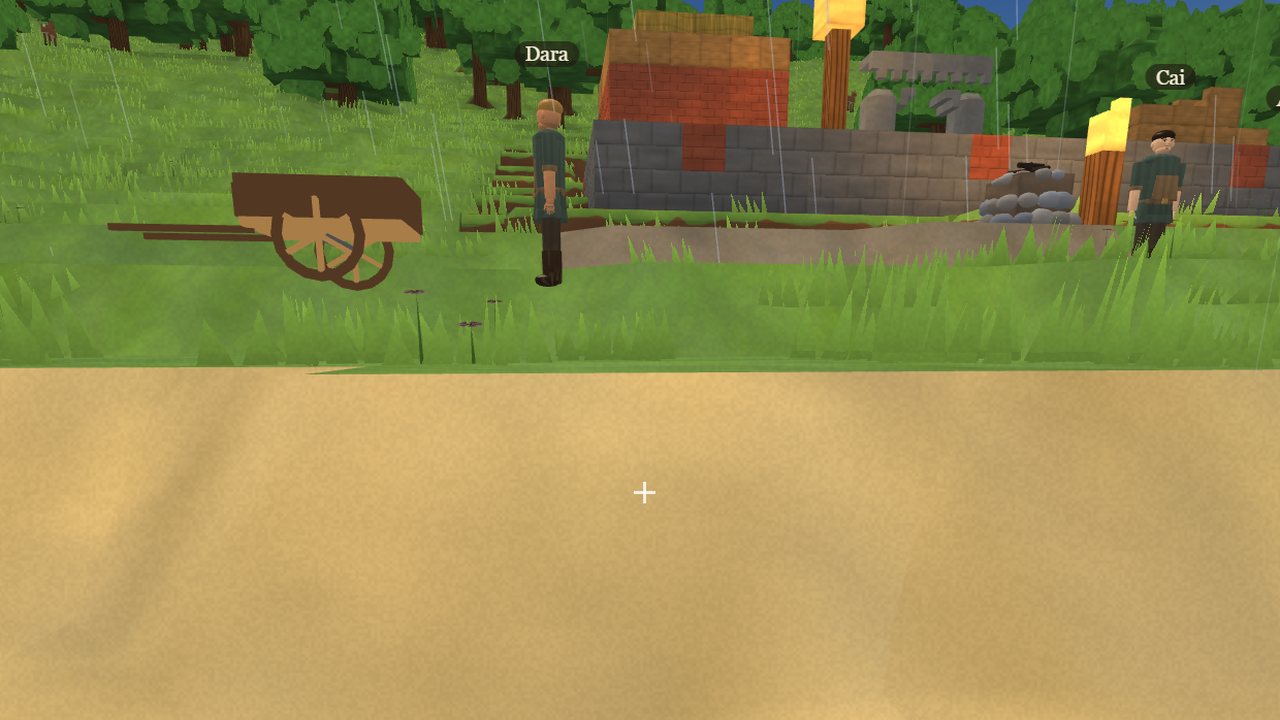
At this wave the public link was not open, so shared worlds ran on our own machine and local network, and raids, the gloam and story scenes did not come into shared worlds; the soak with three players ran at about 69 fps. Since then the follow-up brought raids, the gloam and story scenes into shared worlds, and live rebuild 26 opened the public link. The ten-player, 60-minute test is written but has not run.
Live on our demo host since live rebuild 25 on 17 October 2026. The demo host is our own test server; since live rebuild 26 a shared world on it can also be joined from a link over the internet.
Every wave closes with a play test on the build machine in the browser: a scripted story test that plays the new loop end to end and reloads the world to check it came back exactly, the older waves' story tests run again on the merged build, the engine's unit tests, and a 15-minute soak that records frame rate, faults and world memory. The numbers above come from those runs, as written in our build tracker.