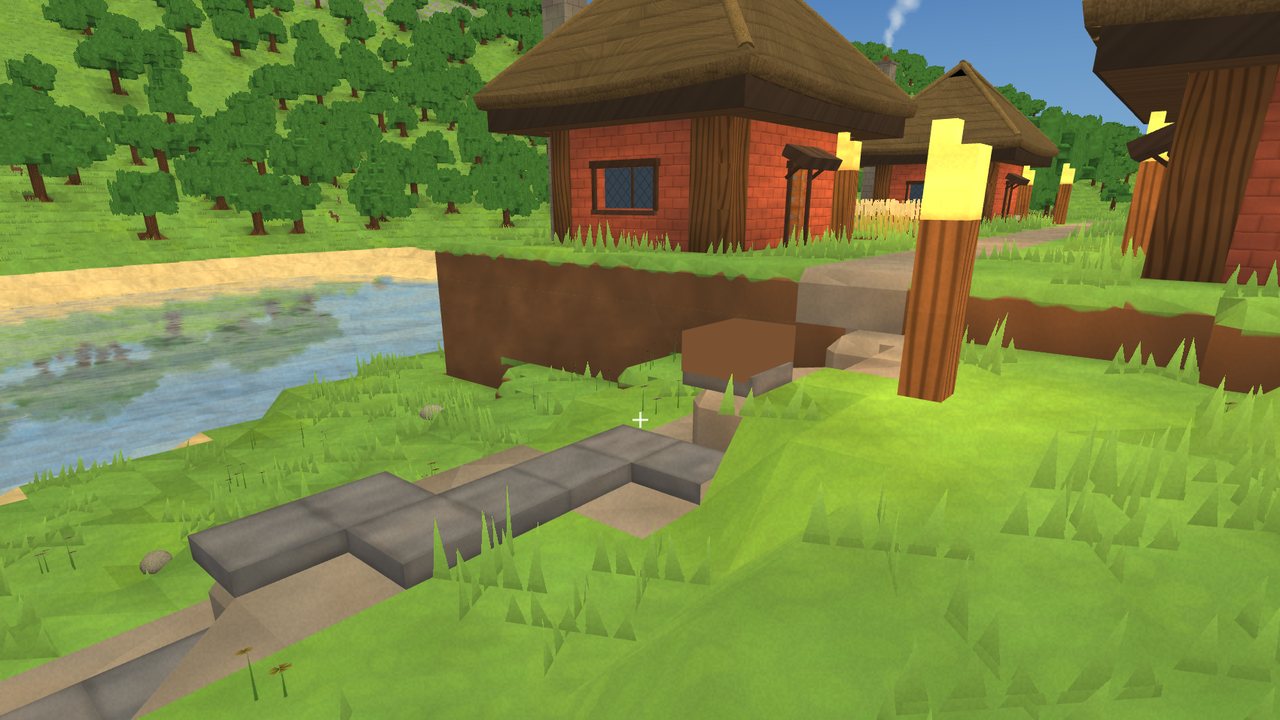
Levers, wire, pushers, waterwheels, rails and hopper chutes: the game's own block logic.
Wave 12 gave the world machines. A fast tick runs ten times a second in a written order, so the same machine does the same thing every time. There are levers, pressure plates, trip lines, daylight stones and latches; copper wire whose signal fades over 15 blocks; delay, inverter and comparator posts; pushers and sticky pushers that move up to 12 blocks; doors, gates and trapdoors that open by signal or by hand; a lamp stone that lights the world; a bell, a dropper, a dispenser and a watcher.
Waterwheels and windmills turn shafts that drive a millstone, a saw and bellows. Rails, powered rails and a rail cart carry goods; chests, crates and barrels hold them; hopper chutes move them. Running water flows seven cells and carries items and creatures, and gloamlings and hens follow rules that farms can use. In the test, a sorter put every item in its place, 24 of 24 three times, and a clock ticking every two steps kept exact time across a reload.
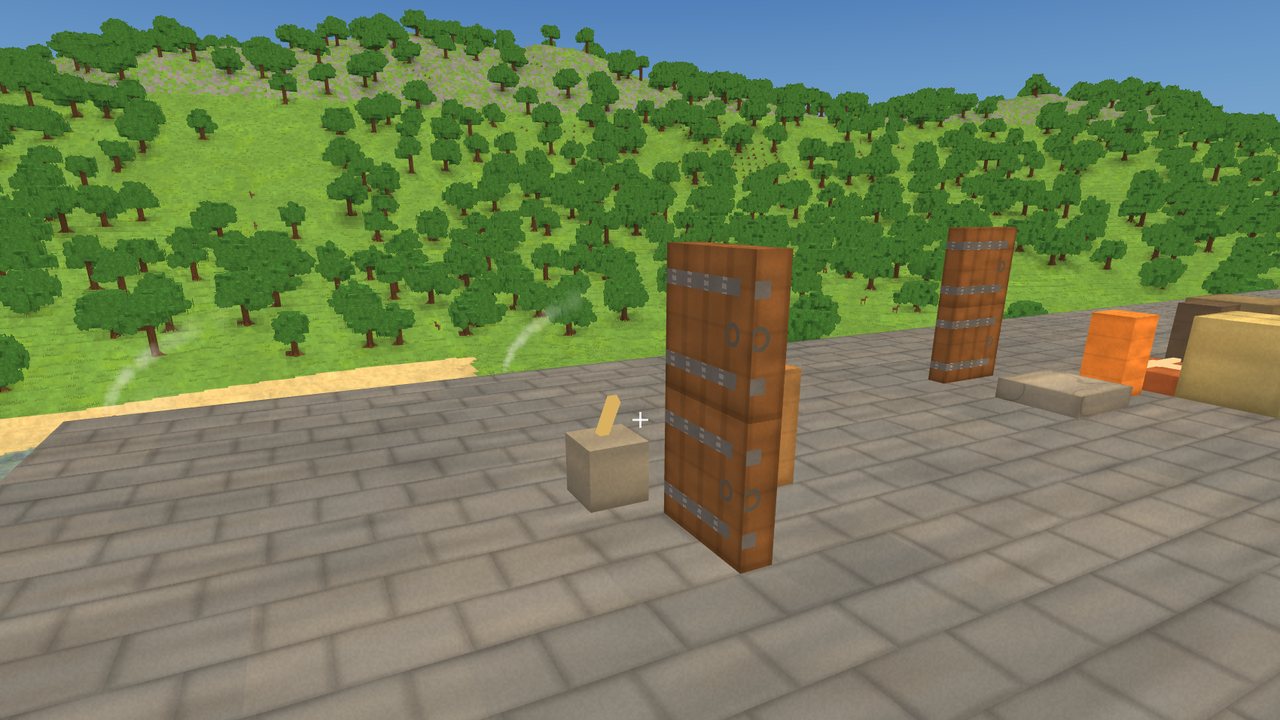
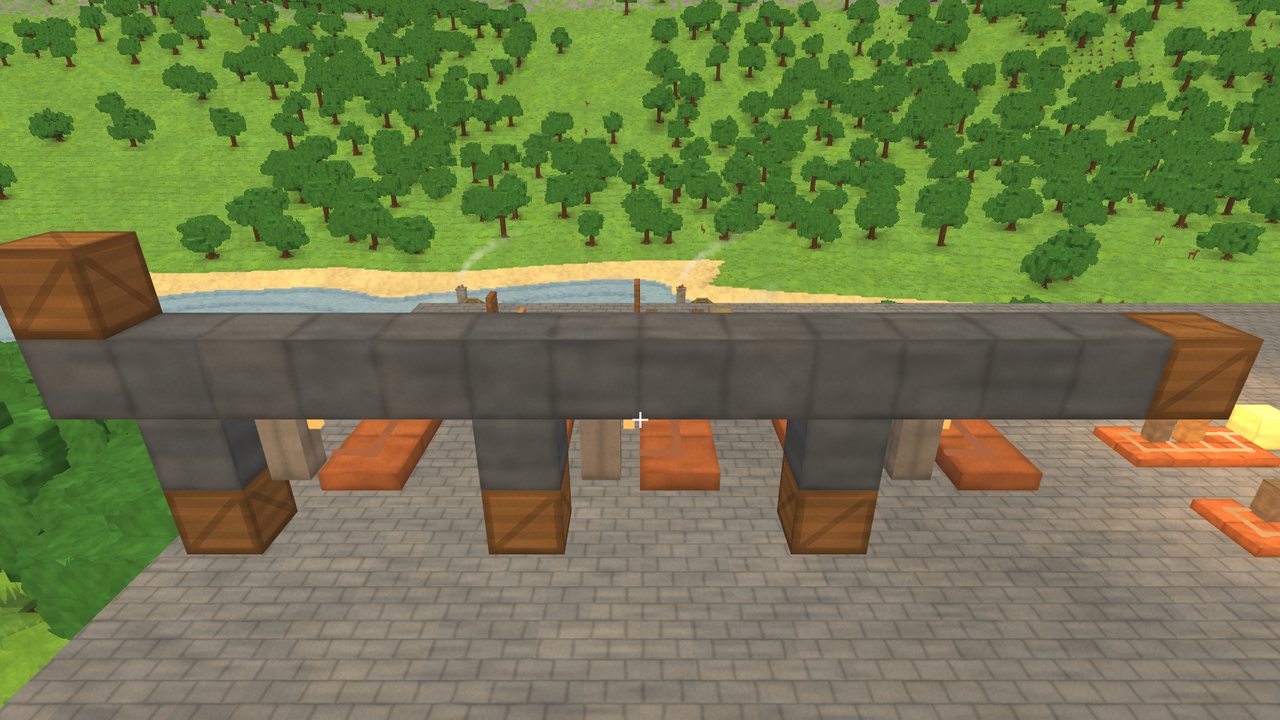
The parts are still plain blocks with marks and are dark at night, wire is a 25 cm strip, and power does not pass through solid blocks. In a shared world the machines follow the Steward's clock, which has not yet been tested with two pages.
Live on our demo host since live rebuild 25 on 17 October 2026. The demo host is our own test server; since live rebuild 26 a shared world on it can also be joined from a link over the internet.
Every wave closes with a play test on the build machine in the browser: a scripted story test that plays the new loop end to end and reloads the world to check it came back exactly, the older waves' story tests run again on the merged build, the engine's unit tests, and a 15-minute soak that records frame rate, faults and world memory. The numbers above come from those runs, as written in our build tracker.