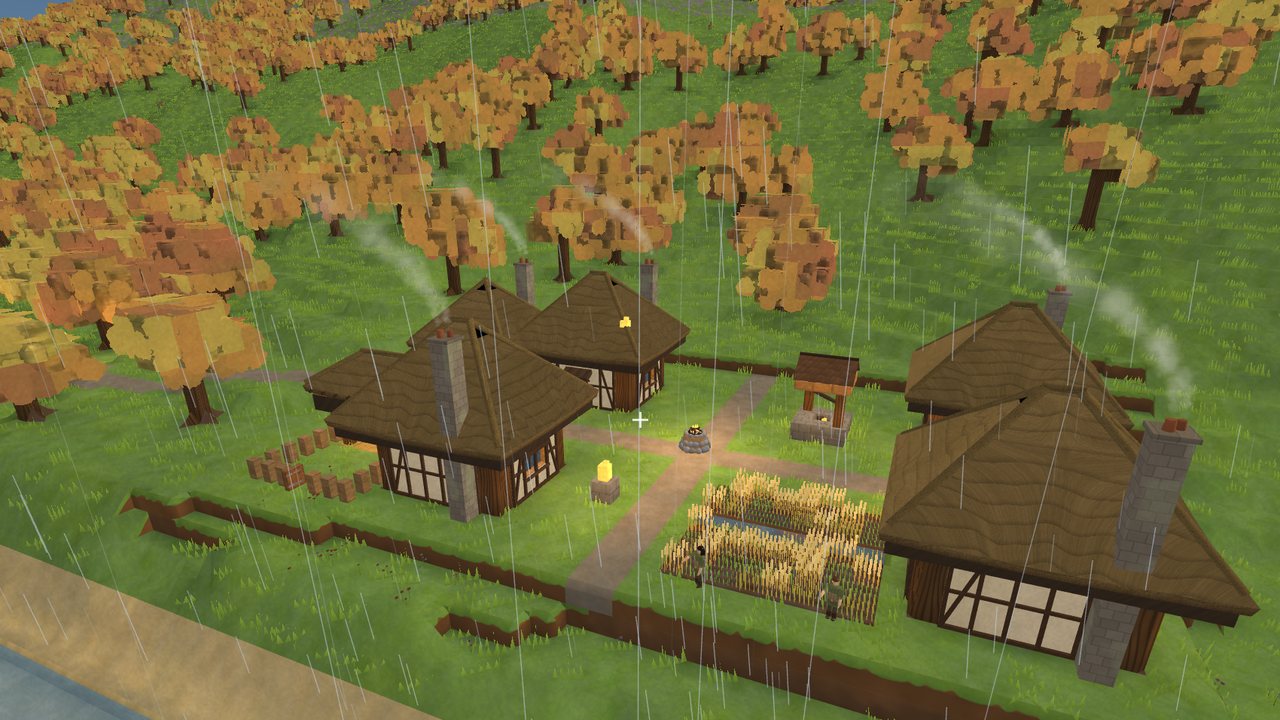
Brush strokes, faces, dressed buildings and the gloam fog, then a second pass on folk, fog, water and grass.
The first look pass painted the world: brush strokes on ground, wood, bark, leaves and thatch, darker edges, a distance fade and a time-of-day grade with paper grain. Folk got faces that blink, with brows, a nose and a mouth, four hairstyles, five skin tones, hands with thumbs and trade clothing for ten trades, and they breathe, turn their heads and walk with weight. Buildings were dressed with hipped thatch, timber frames over plaster, leaded windows that glow at night and stone chimneys with smoke. The gloam became soft fog that drifts into dips and is burned back by lamp and hearth light. Each step costs 0.3 ms or less.
The second pass added five more settings: closer detail on folk, fog that reads at 25 m, river reflections of the far bank and the lamps, ground strokes laid as dabs, and a toned-down deck edge under the eaves. Two night looks were shot on the same cameras and one was kept. The before and after pictures below use the same camera.
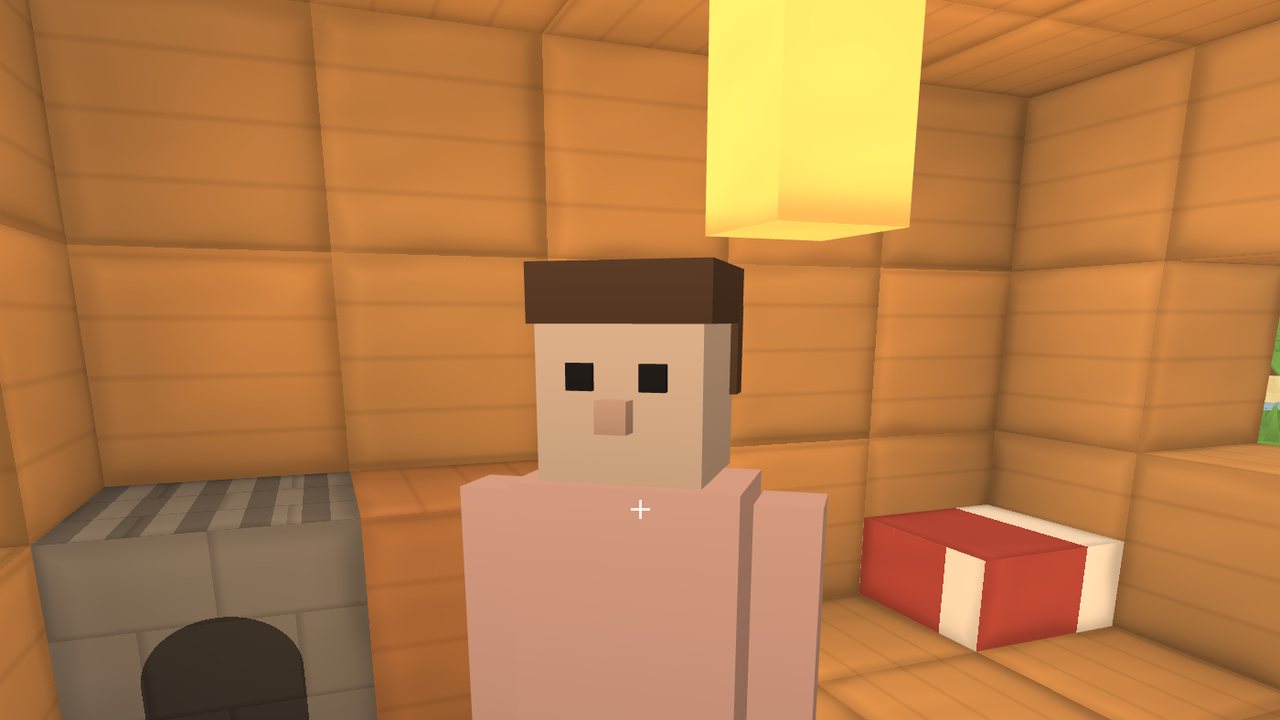
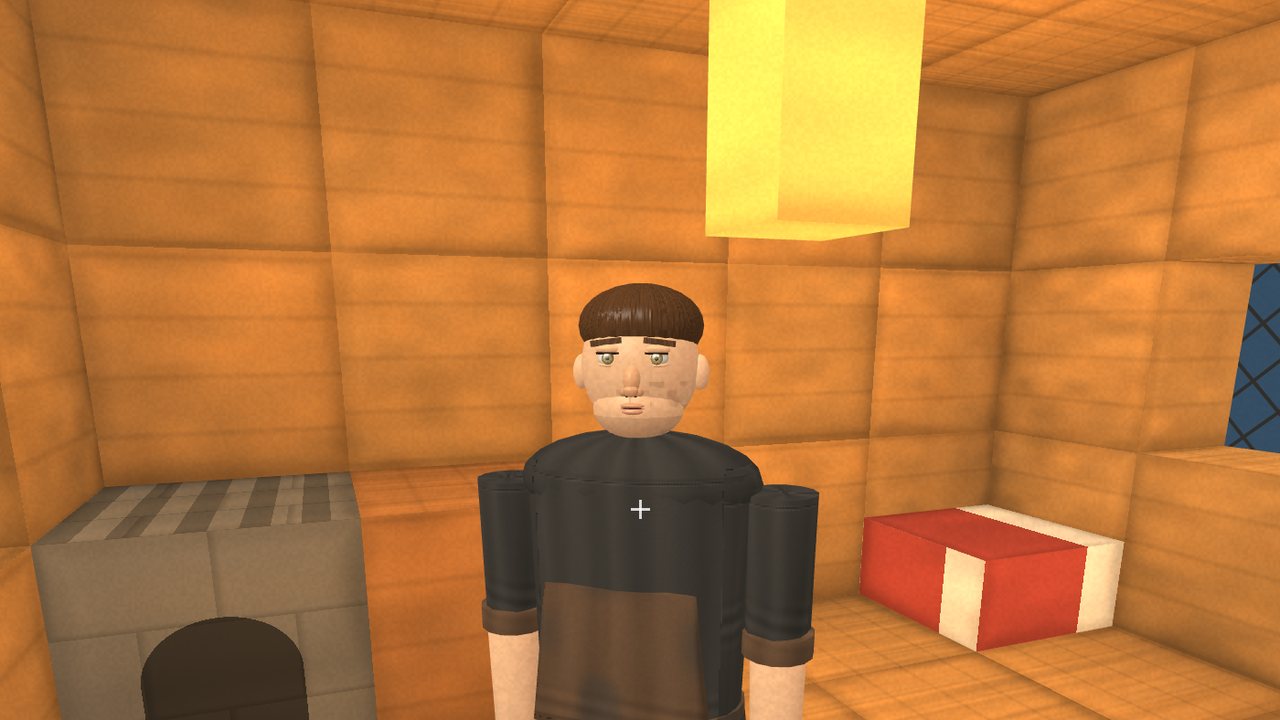
Folk are less toy-like but still stylised. The fog still reads as blobs, and the grass dabs look like polka dots up close. The second pass's soak stopped at 14.6 of 15 minutes when the machine ran low on memory; it had no faults up to then.
Live on our demo host since live rebuild 25 on 17 October 2026. The demo host is our own test server; since live rebuild 26 a shared world on it can also be joined from a link over the internet.
Every wave closes with a play test on the build machine in the browser: a scripted story test that plays the new loop end to end and reloads the world to check it came back exactly, the older waves' story tests run again on the merged build, the engine's unit tests, and a 15-minute soak that records frame rate, faults and world memory. The numbers above come from those runs, as written in our build tracker.