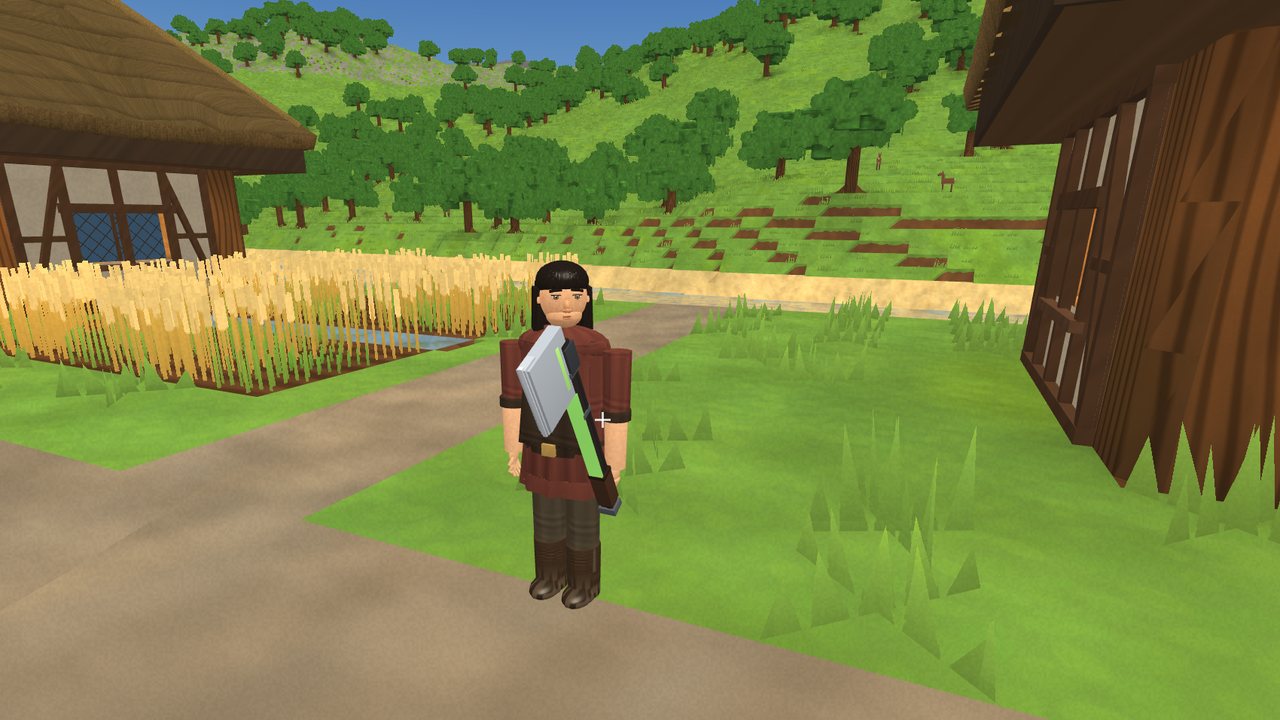
Every trade fights with its own tools, and eleven named arms carry their own deeds.
The first arms pass gave each trade its own weapons and armour, so a woodcutter fights with what a woodcutter carries, and a fight saved in the middle reloads exactly. The second pass added a ladder of plain, fine, named and heirloom arms, and eleven named arms as rows, each with a buff, a chance effect, a second step earned after 30 blows, a use at work and a line of its own. Each is measured against the plain arm of its kind.
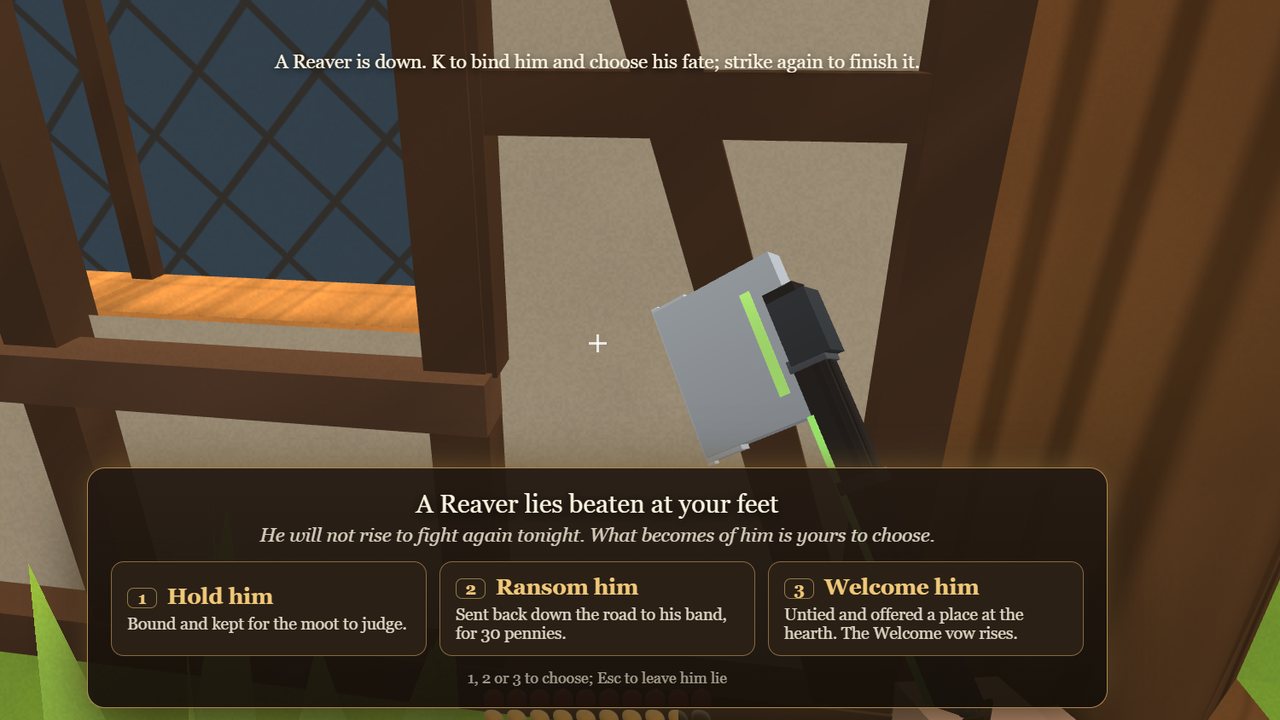
Named arms are made by master crafting from rare materials with a price, and need 3 Grace at the hearth. Carrying the arms of three trades together roughly doubles damage per second. An heirloom passes to the heir at a succession and survives a reload. The models are richer, with an inlay that glows, patina and a first-person arm. When a Reaver is beaten you choose with 1, 2 or 3: hold him for the Moot, ransom him for 30 pennies, or welcome him to the hearth.
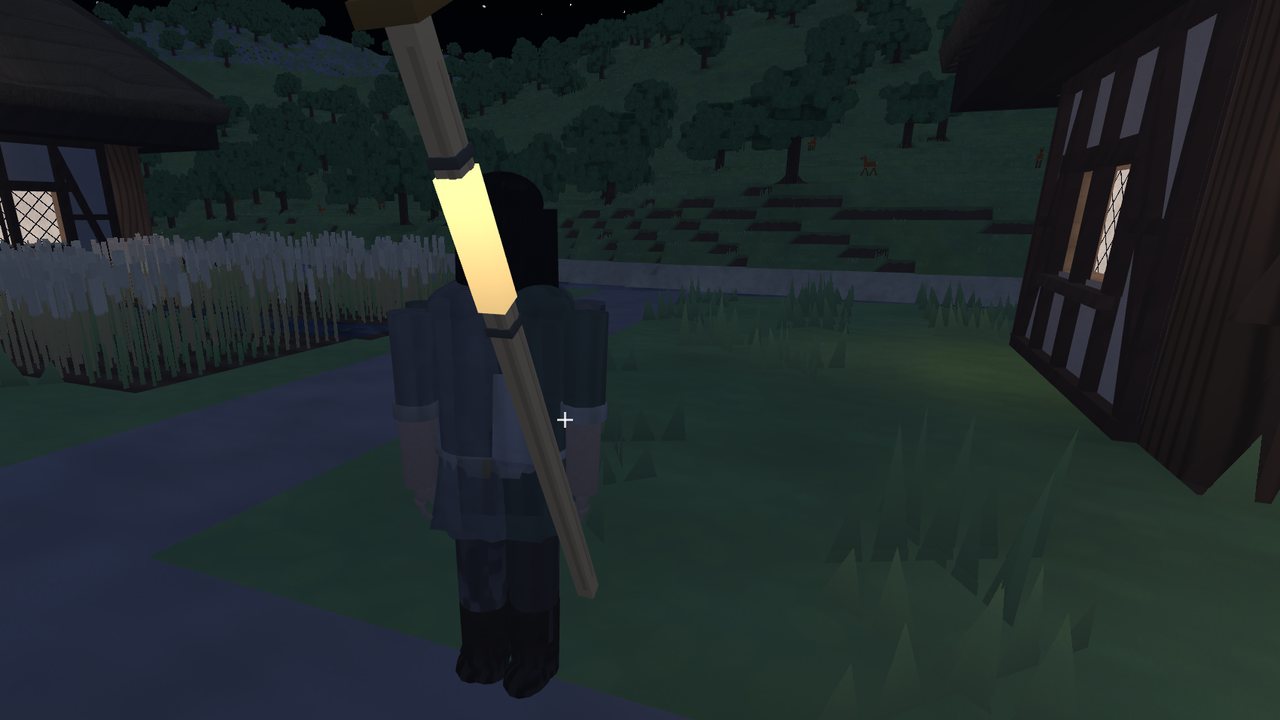
Named arms look too large in folk hands, the glow is a stripe rather than a light, and folk hold their arms on the far side. In the first pass, 40 armed fighters cost 2.8 ms of work per frame, but no raid fired in its soak, so raids were proven in the story test instead.
Live on our demo host since live rebuild 25 on 17 October 2026. The demo host is our own test server; since live rebuild 26 a shared world on it can also be joined from a link over the internet.
Every wave closes with a play test on the build machine in the browser: a scripted story test that plays the new loop end to end and reloads the world to check it came back exactly, the older waves' story tests run again on the merged build, the engine's unit tests, and a 15-minute soak that records frame rate, faults and world memory. The numbers above come from those runs, as written in our build tracker.