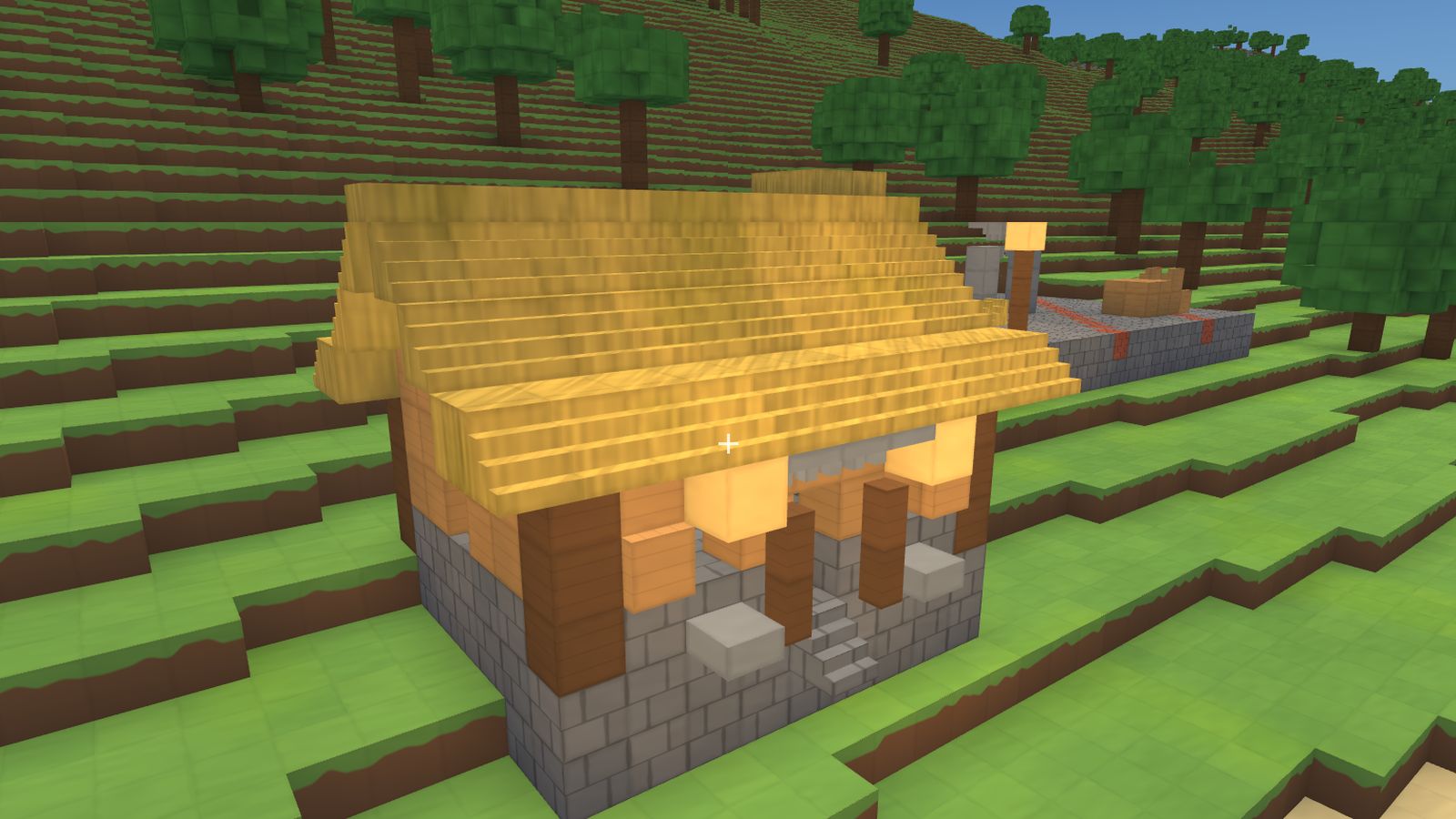
Walk, swim and climb; place, break and chisel; save the world and find it exactly as you left it.
Wave 1 made it a game you can stand in: walking at 4.4 m/s with quarter-block collision, jumping, swimming and climbing; place, break, pick, undo and redo; a chisel with eight shapes in four turns; day and night with sun, moon, stars and lantern light; and saved worlds that reload cell for cell. The first painterly pass landed, though it still read as clean voxel art.
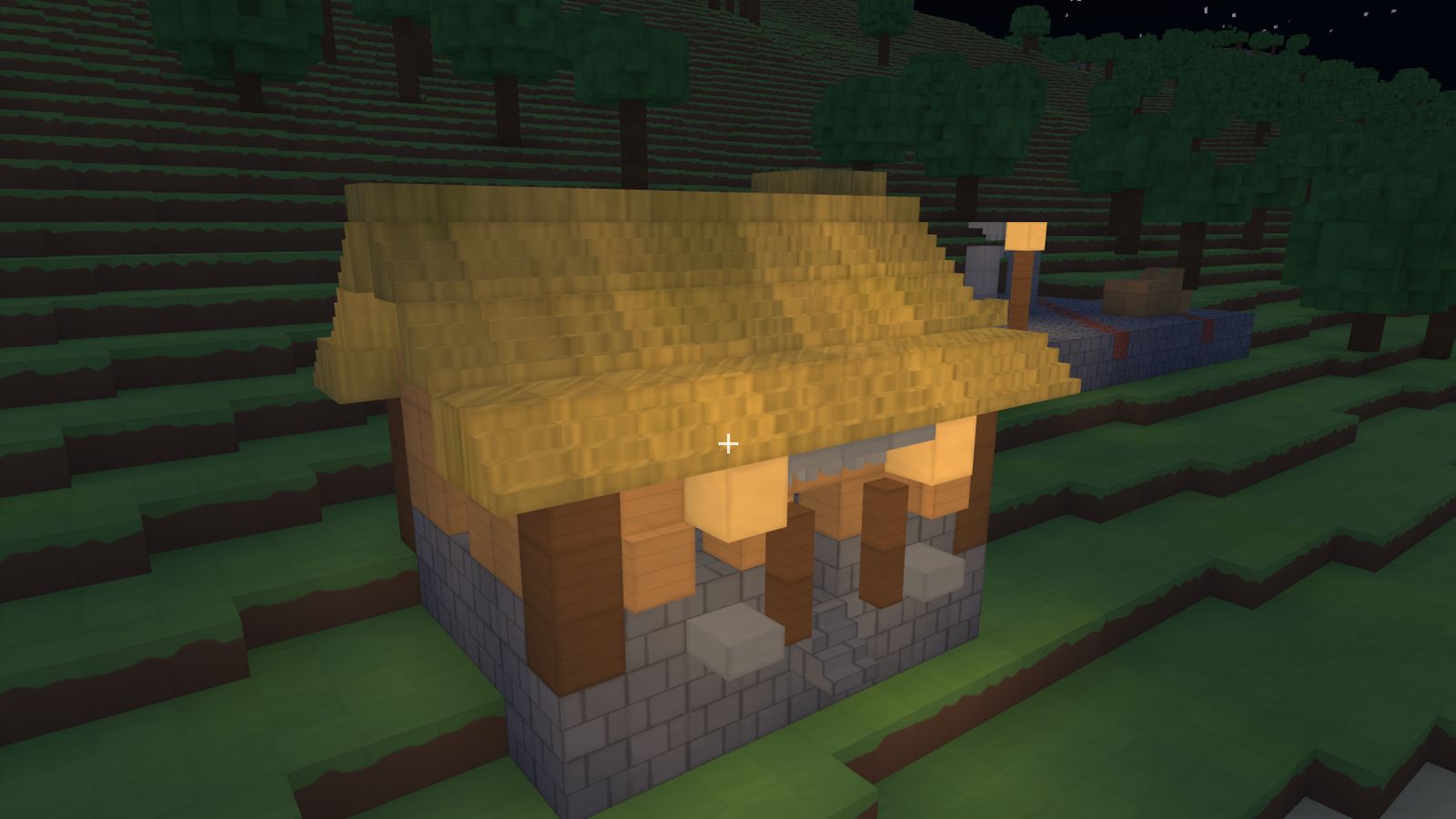
Underground chunks that nobody has edited are now kept as stubs that regenerate from the seed, which brought world memory down to about 19 to 23 MB per view. The mesher gained headroom: light at chunk seams from all 26 neighbours and a one-pass greedy mask. A world is a saved row with its seed, kind, format and mod versions, with its chunks and an edit log stored as blobs and served by the game host; every write is from the same origin, capped in size and checked for kind and format. Sun, moon, stars and fog follow the clock. The story test passed 13 of 13, a teleport reached the first ring in 0.14 to 0.41 seconds, frames took 4.3 ms at the 95th percentile and meshing 2.5 to 3.5 ms. 313 unit tests passed and the city engine's 16 golden images still matched.
The first 30-minute session ran in two parts, 18.7 and 6.5 minutes with no faults, because other work paused the machine for memory. The full 30 minutes passed later: 30.0 minutes, 0 faults, 239.9 frames a second, 42 teleports and 57 saves with none failed. The painterly pass still read as clean voxel art.
This work is in every build since, including the one live on our demo host today (live rebuild 26, 17 October 2026).
Every wave closes with a play test on the build machine in the browser, at a 12-chunk view: frame rate, faults, world memory, and a scripted story test that plays the new loop end to end and reloads the world to check it came back exactly. What did not pass is written down and carried into the next wave.